- Home
- Case studies
- Underfloor heating home: a hidden leak dripping through the brickwork
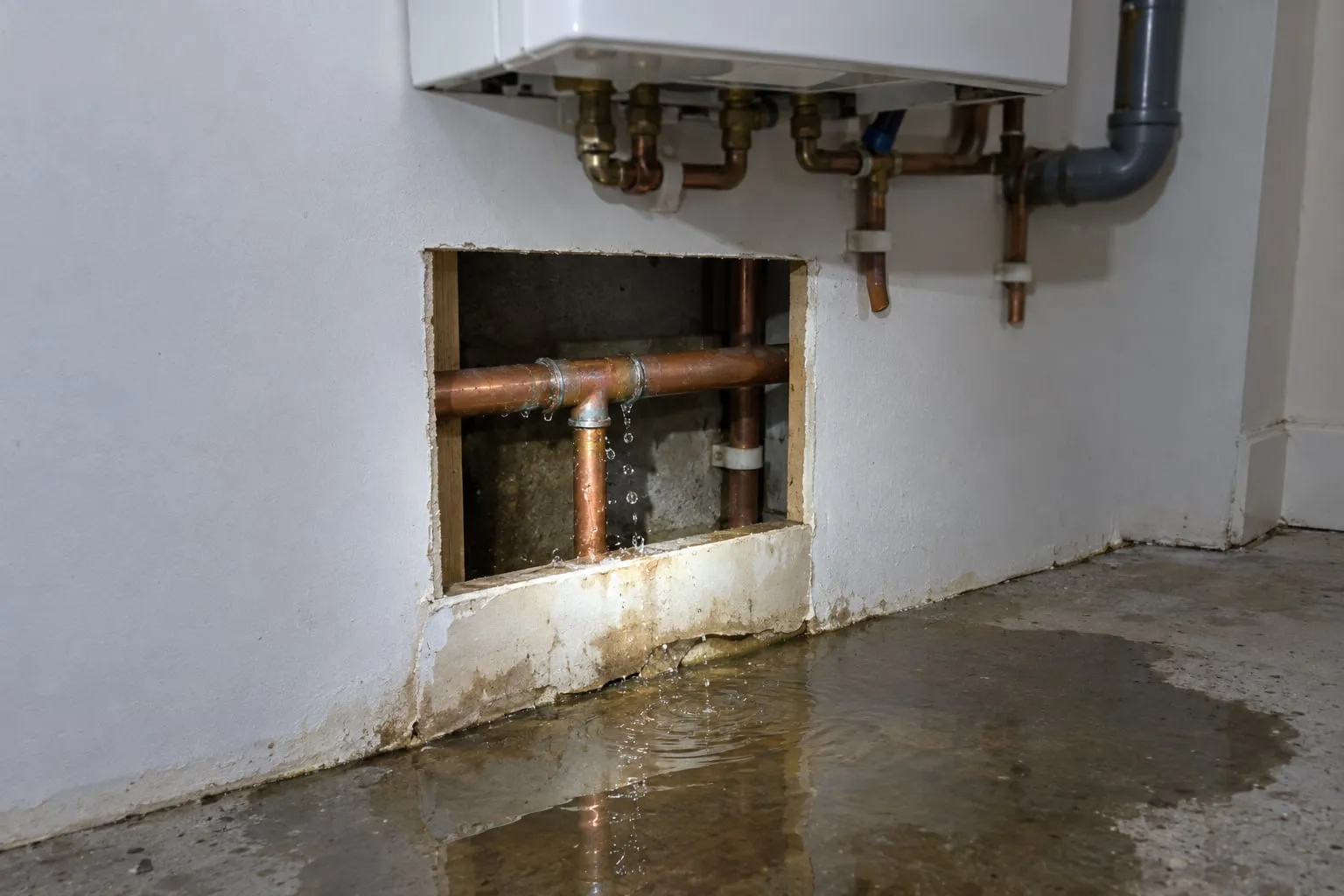
Leak under a screed floor with underfloor heating, found behind the boiler room wall
The meter crept every two minutes and water dripped through an outside wall. Pressure testing pointed to the hot supply, and acoustic listening led to a failed T-piece, replaced the same day.
What was happening
The house had underfloor heating under tiles and screed throughout, with more pipework in a channel under a plastic membrane. A drainage system under the house carried the water away, so nothing pooled indoors. The signs were a constant drip coming through the brickwork outside and a water meter that moved slightly every two minutes with nothing in use.
What the engineer did
Damp readings confirmed moisture across the boiler room floor and a water-damaged plasterboard wall. Every supply was pressure tested, and all of them held except the hot supply. Thermal imaging told the heating loops in the screed apart from the hot and cold pipes in the channel. An endoscope camera through a gap at the end of the channel showed the space under the floor was very wet. Acoustic listening picked up leak noise behind the boiler room wall, and dye put into the waste pipes appeared nowhere, which ruled them out.
What was found
With the customer’s permission the wall was opened. Water was escaping from a 22 mm to 15 mm T-piece fitting on the hot supply, and a large amount had collected on the concrete floor beneath.
What happened next
The engineer replaced the fitting on the same visit, and a pressure test straight afterwards showed the system holding with no further active leak.
If you own or build a new home
Where pipes are buried in screed and channels, water can travel a long way and leave by a route nobody expects. A meter check with everything off and a pressure test on each supply narrow it down before anything is opened.
More case studies
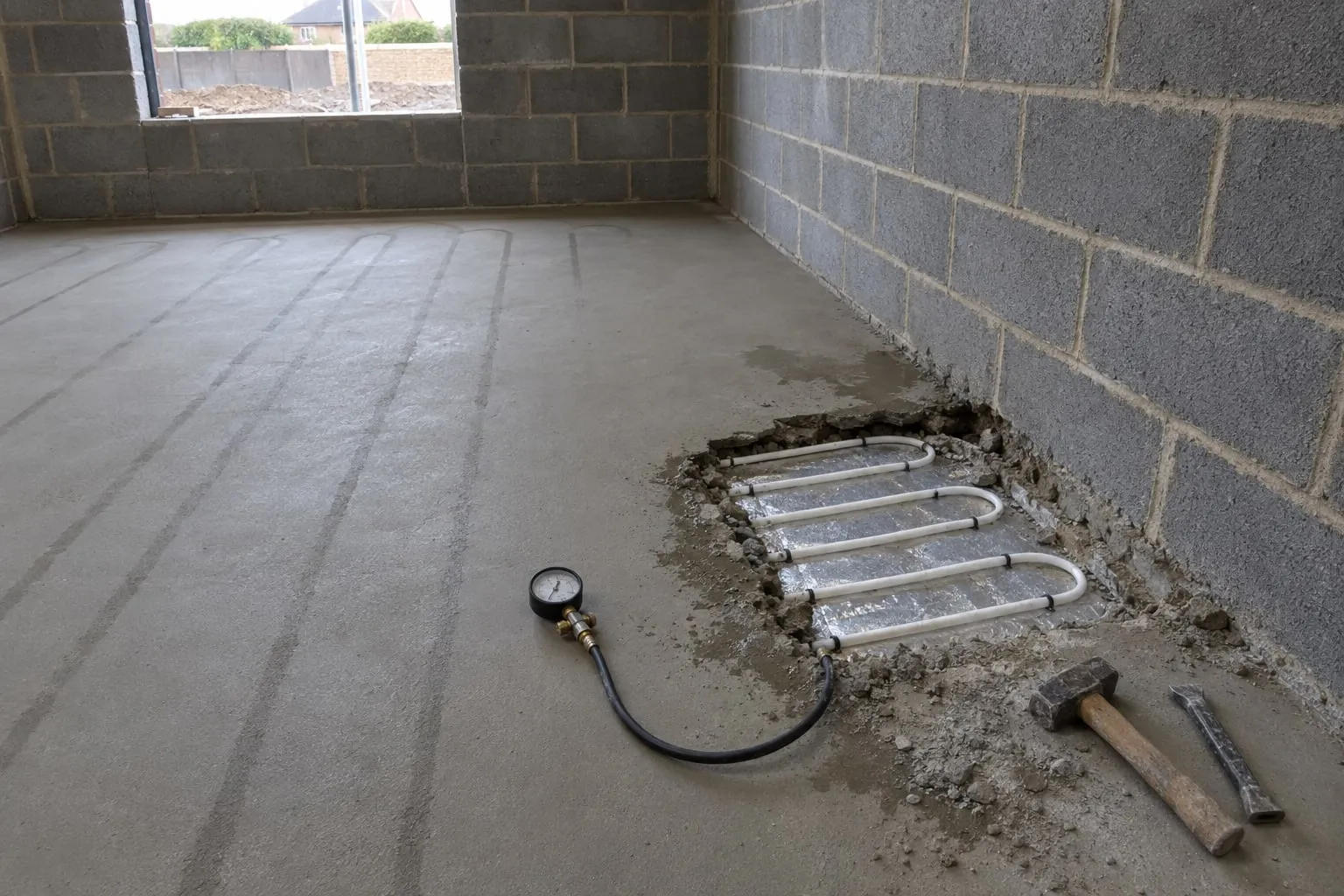
House under construction: an underfloor heating leak under new screed
A loop failed its pressure test after the screed was laid. Sound and gas both travelled along the pipes, so thermal imaging with warm water found the leak on the far side of the room.
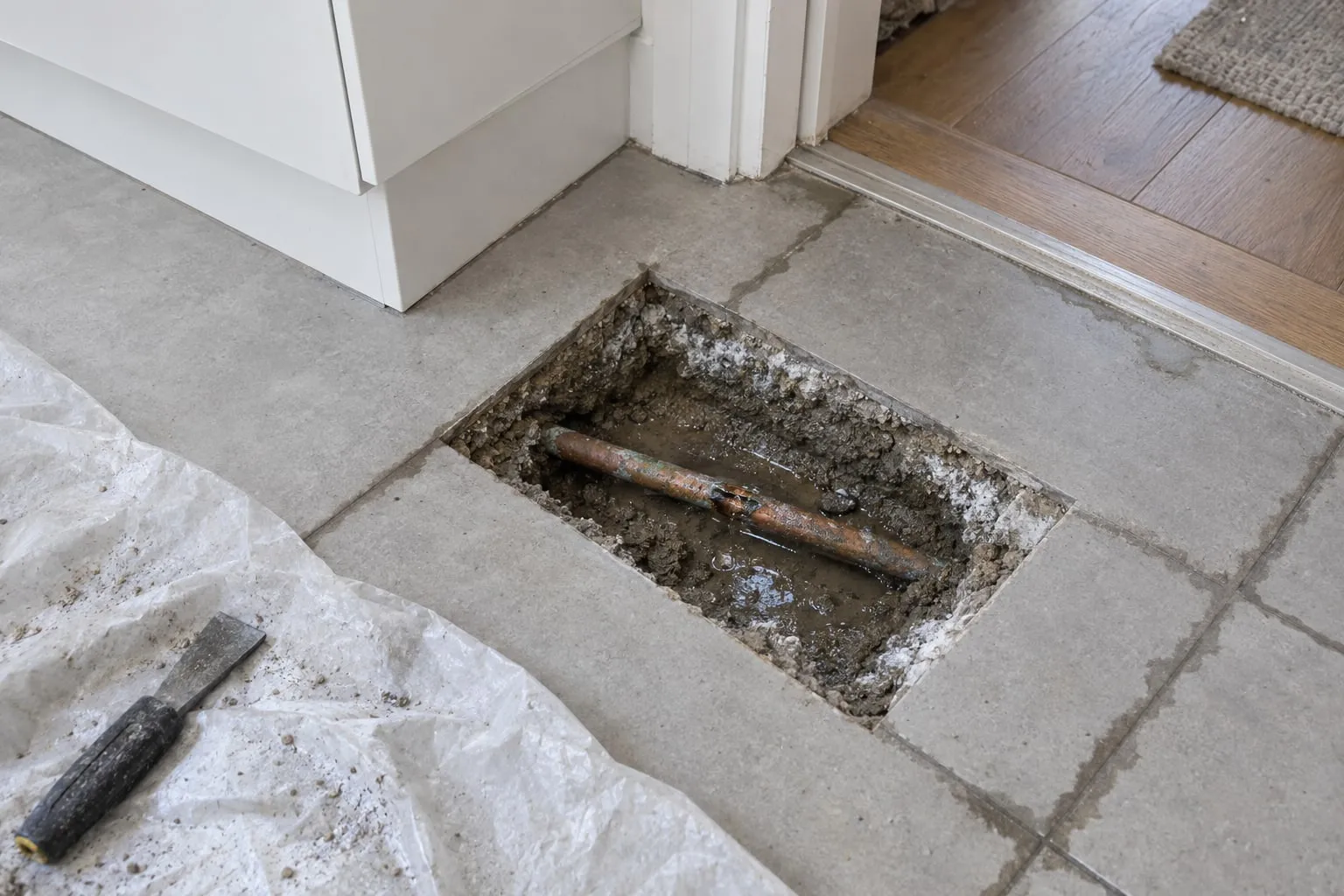
Detached house: up to 150 litres an hour leaking under the kitchen
Salts were pushing through the screed and the driveway paving had collapsed. Isolation testing found the kitchen supply, and four detection methods agreed on one spot at the kitchen doorway.