- Home
- Case studies
- House under construction: an underfloor heating leak under new screed
Underfloor heating leak detection in a house under construction
A loop failed its pressure test after the screed was laid. Sound and gas both travelled along the pipes, so thermal imaging with warm water found the leak on the far side of the room.
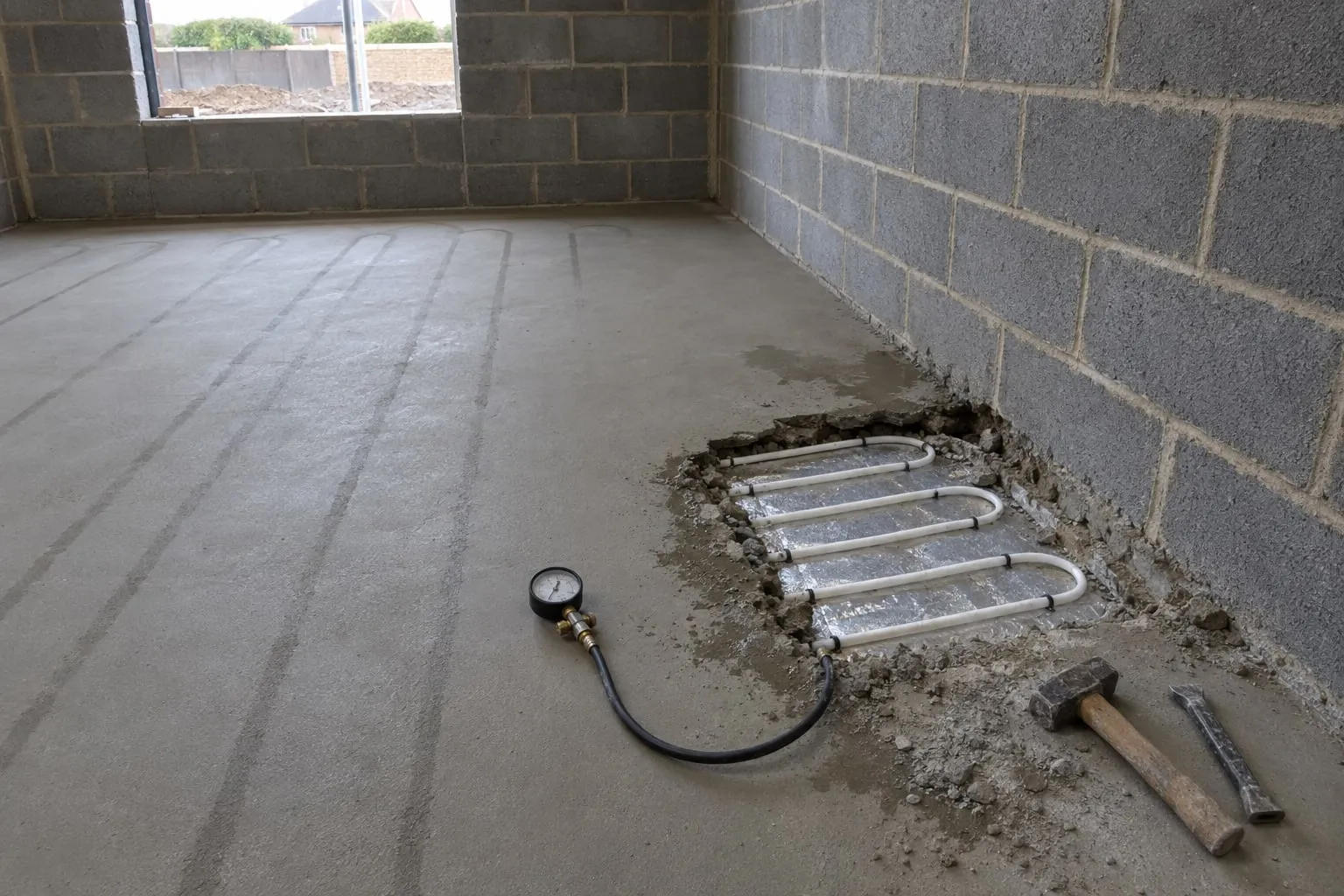
What was happening
The house was still being built. The underfloor heating had been laid as separate runs to a manifold and screeded over, but the system had not been commissioned and there was no boiler yet. A pressure test showed a leak, and the engineers were told it was probably in the middle of the room.
What the engineer did
The site plumber isolated the other runs so only the leaking circuit was under test, and a pressure test confirmed the leak. Acoustic equipment heard it, but the runs were laid in a ring and the noise travelled along the pipe, so it could not be pinned down. Tracer gas showed up quickly near the window. When a corner of screed was opened, the gas turned out to be escaping along a narrow channel beside the pipes and surfacing at the edges of the room. With no boiler on site, hot water was run through the pipes by hand to give the thermal camera a weak trace against the cold screed.
What was found
The pipes ran down the left side of the room, and never through the middle as the engineers had been told, which explained why the sound had been so hard to follow. The thermal camera picked up a faint anomaly midway along the left side, and when the site plumbers opened the screed there, the leak was on the pipe.
What happened next
The plumbers on site exposed the pipe at the marked point and repaired the leak.
If you own or build a new home
On a new build, the pipes do not always run where anyone thinks they do. Keep the underfloor heating layout, pressure test the loops before and after the screed goes down, and if one fails, find where the pipes really are before deciding where to dig.
More case studies
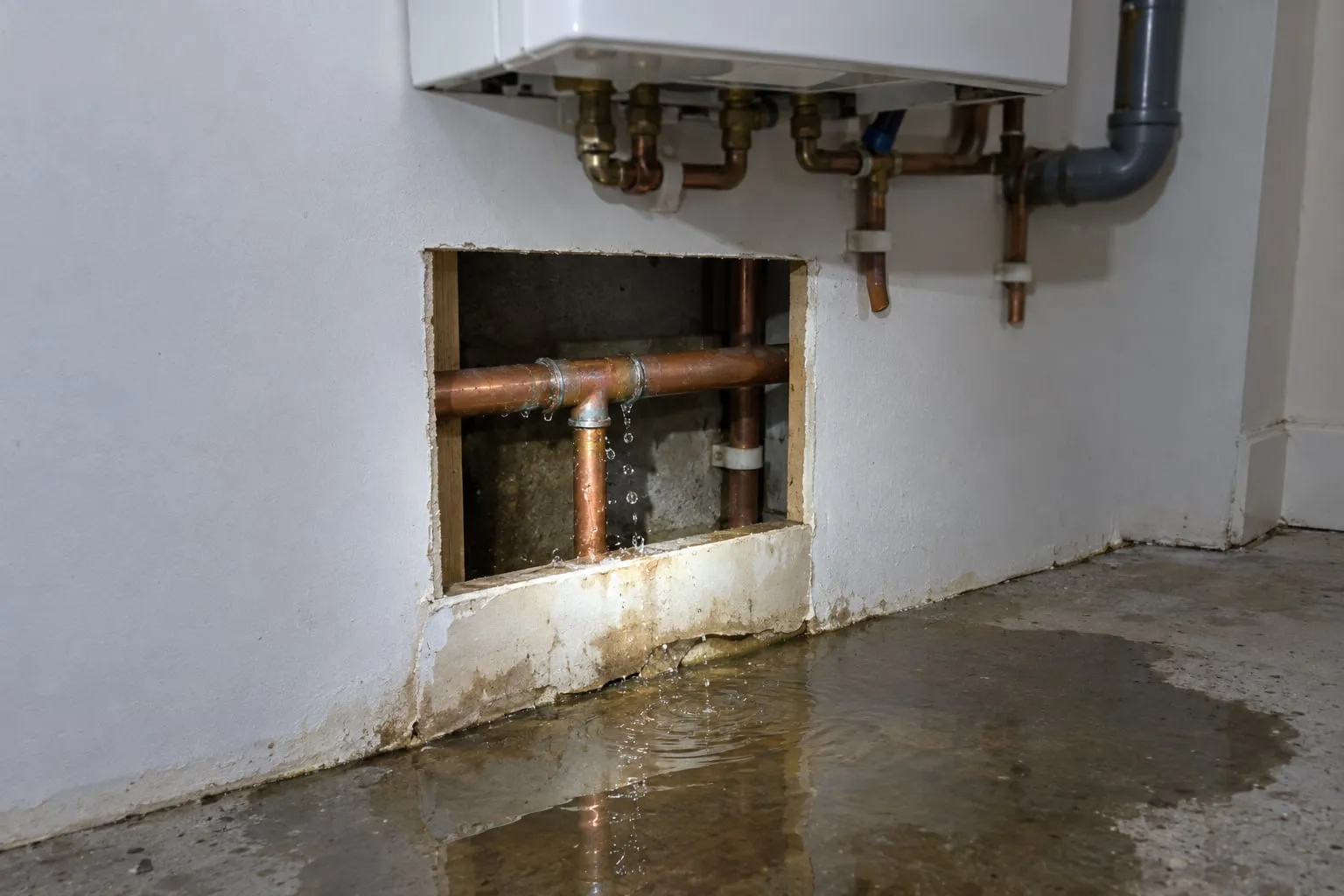
Underfloor heating home: a hidden leak dripping through the brickwork
The meter crept every two minutes and water dripped through an outside wall. Pressure testing pointed to the hot supply, and acoustic listening led to a failed T-piece, replaced the same day.
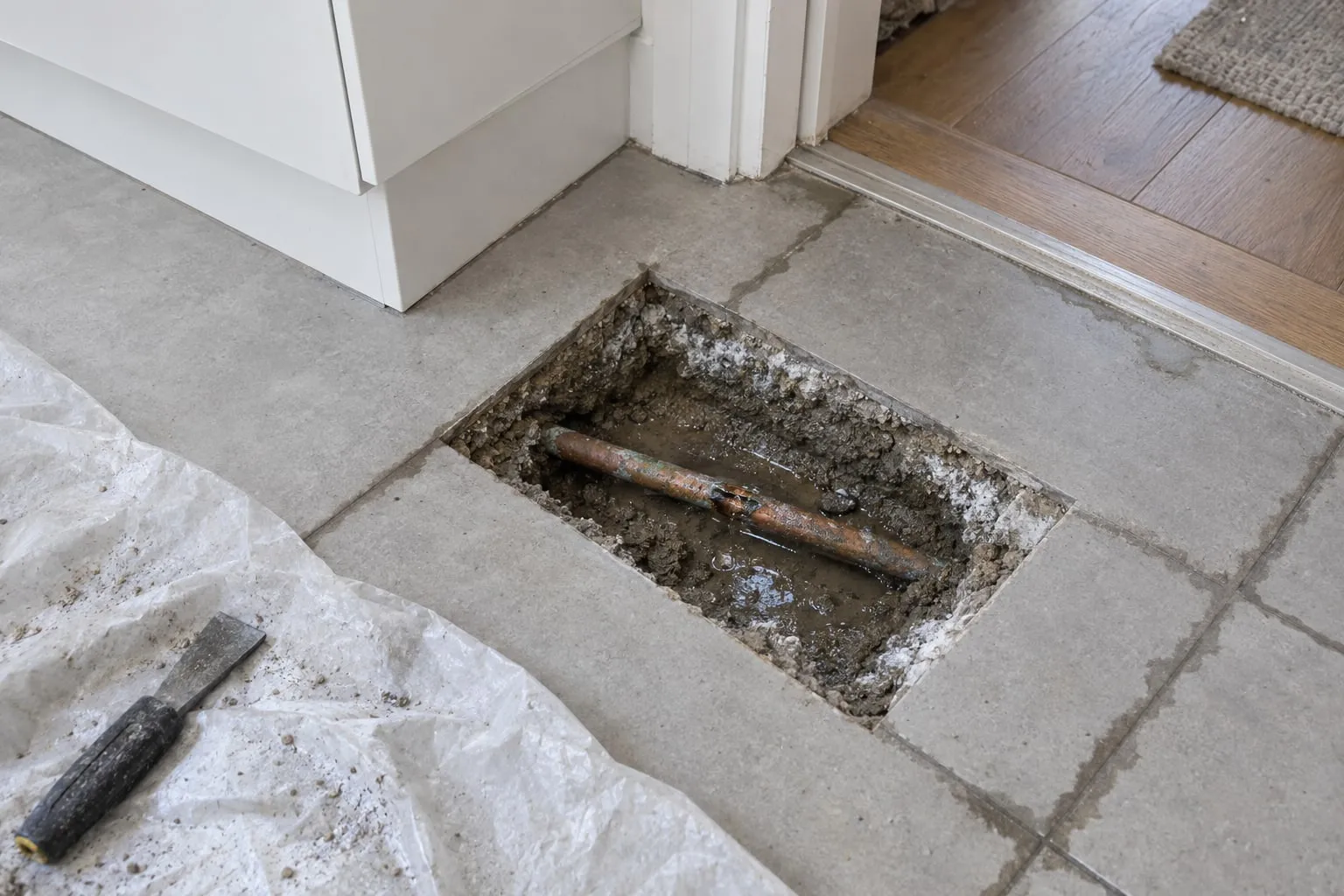
Detached house: up to 150 litres an hour leaking under the kitchen
Salts were pushing through the screed and the driveway paving had collapsed. Isolation testing found the kitchen supply, and four detection methods agreed on one spot at the kitchen doorway.