Leak detection for new build homes and developments
ADI’s engineers find hidden water leaks in new homes, under screed floors, behind fresh plaster and beneath new driveways, before anything gets ripped out.
Pick a part of the house, from the supply pipe under the driveway to the shower upstairs, to see what a leak there looks like and how it is found.
Supply pipe and driveway
What you notice. The supply to a new home runs from the meter at the boundary, under the new driveway and up into the kitchen. A meter that turns with every tap off, block paving that sinks, a patch of lawn that stays soggy in dry weather.
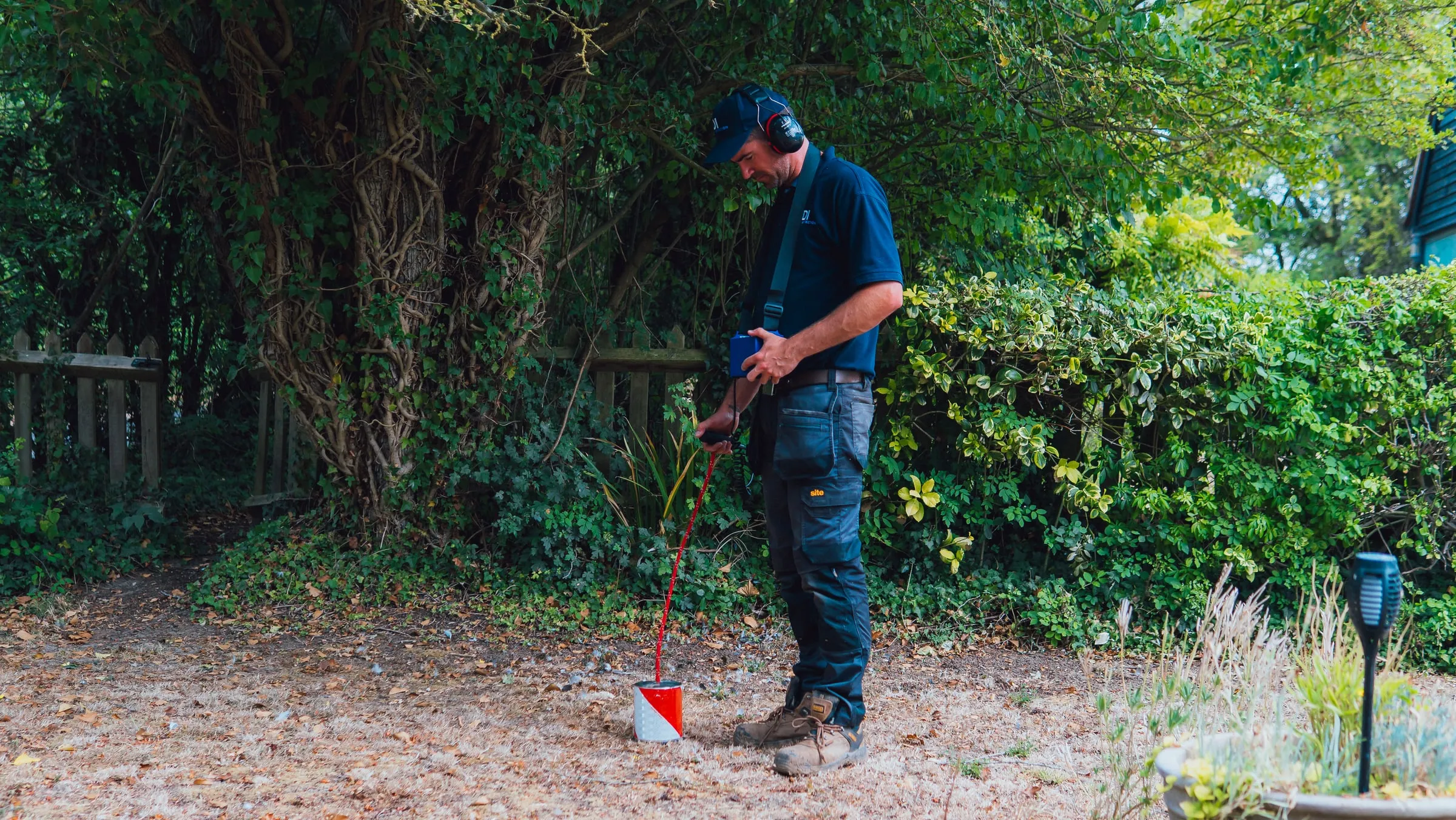
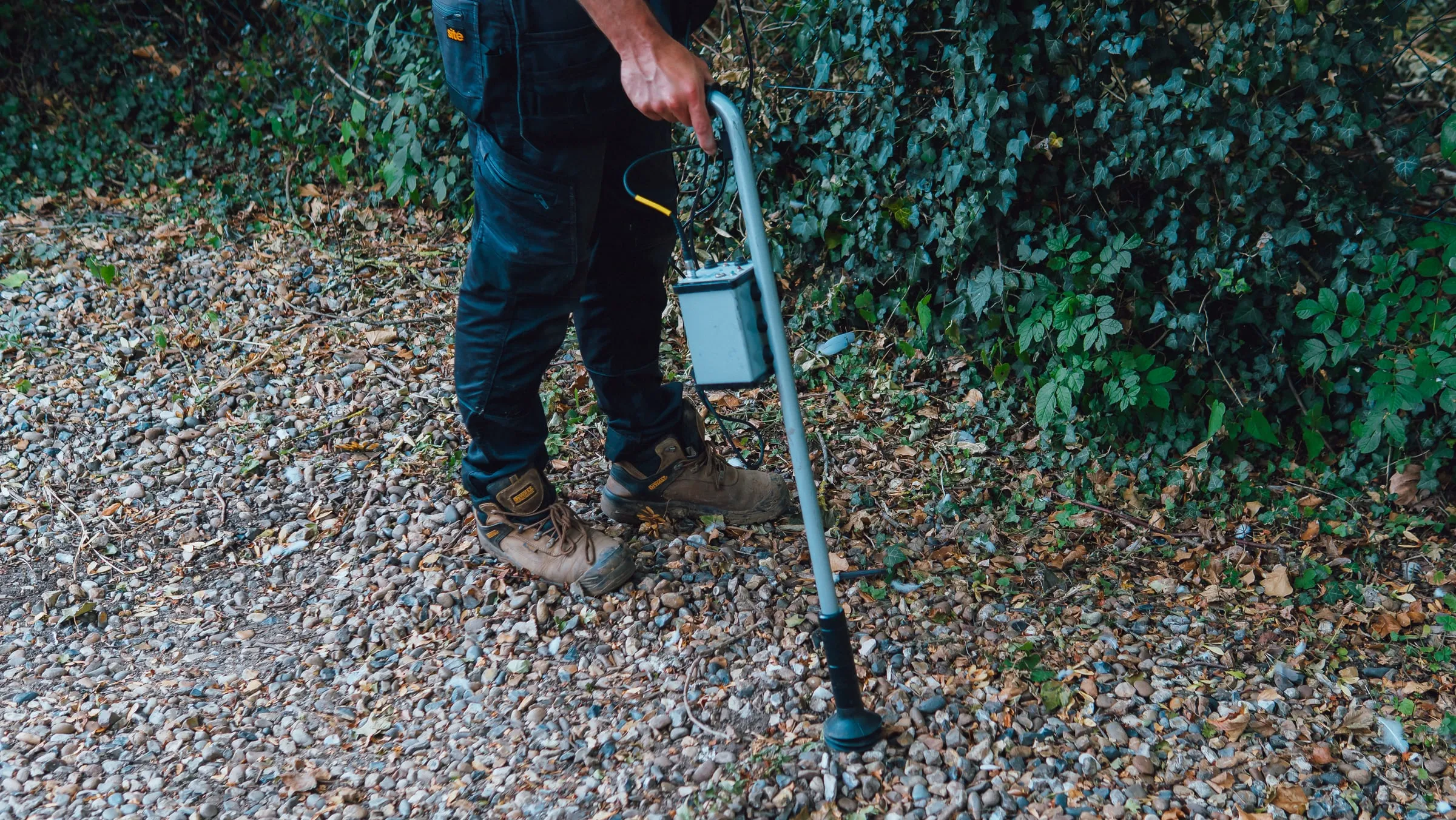
How it is found. Acoustic ground microphones, tracer gas and a trace wire to follow a plastic pipe, then one small, targeted dig to reach it.
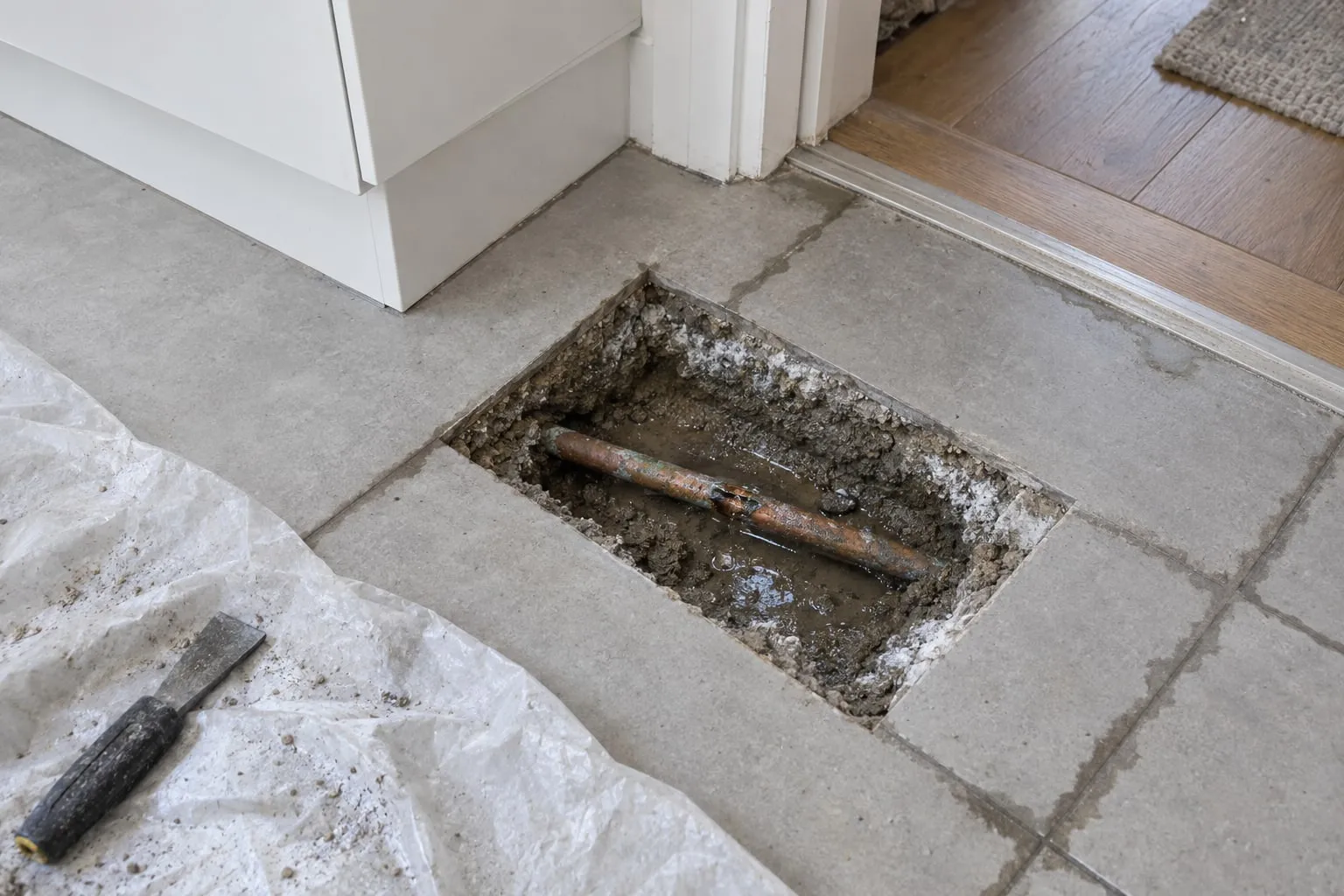
What you notice. Underfloor heating pipes are laid in loops and buried in screed across the ground floor. The system needs topping up, one spot of floor stays damp, grout darkens, or salts appear around the manifold cupboard.
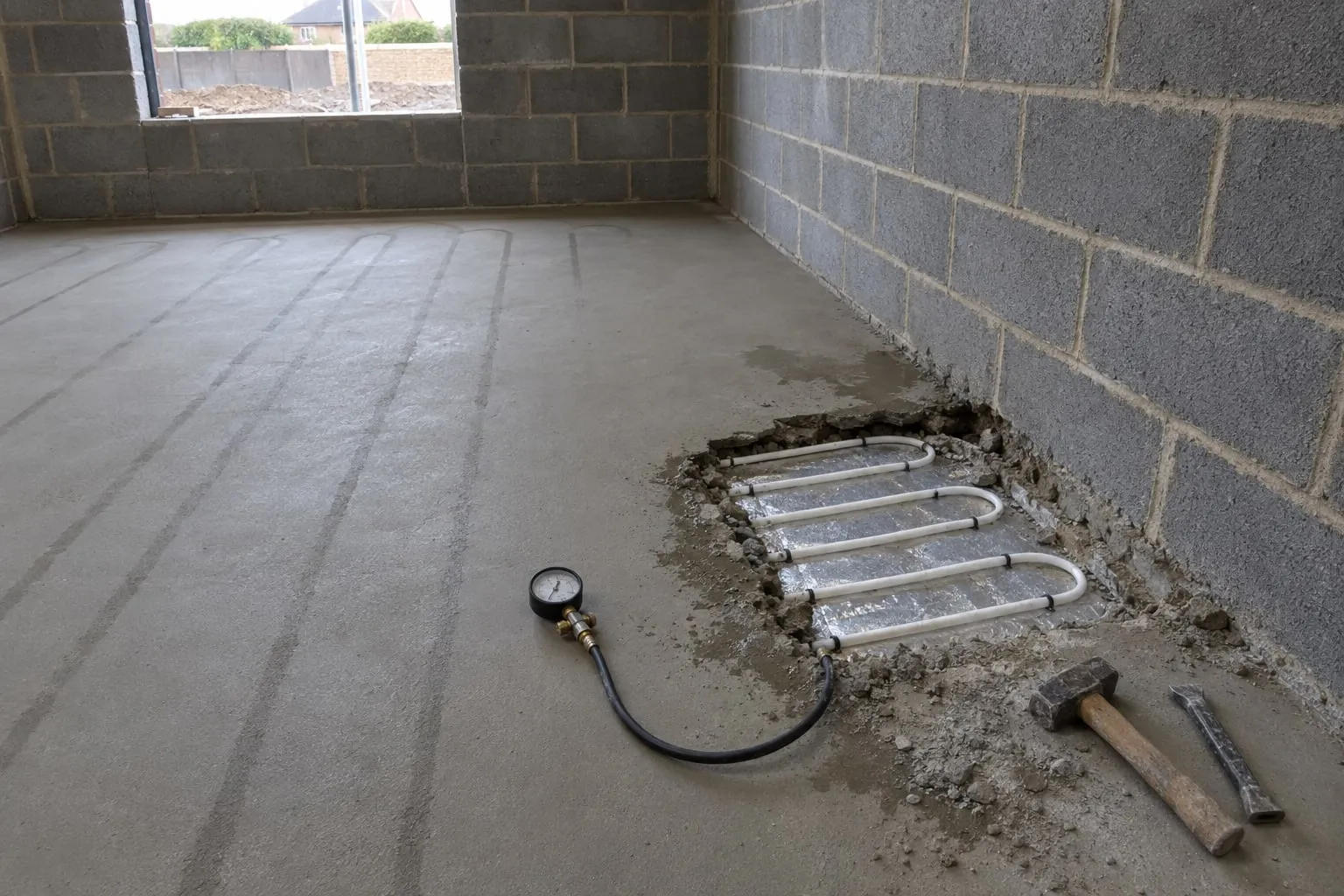
How it is found. Each loop is isolated at the manifold and pressure tested. Thermal imaging shows where the pipes really run, and acoustic listening and tracer gas close in on the leak before any screed comes up.
What you notice. Plastic pipe and push-fit joints run through the joists and behind plasterboard. A ceiling stain under the en-suite, a bulge in fresh plaster, water where a shelf, a TV bracket or a kitchen unit was fixed to the wall.
How it is found. Moisture mapping and thermal imaging trace the water, a borescope camera through a small hole confirms it, and pressure testing shows whether it is the hot supply, the cold or the heating.
What you notice. A leak that only shows when someone showers: a stain on the ceiling below, loose tiles, a musty smell, or water round the base of the tray or the toilet.
How it is found. Dye tests on the tray, screen, seals and waste show which part is letting water through, with moisture readings and a pressure test of the supplies to rule the pipes in or out.
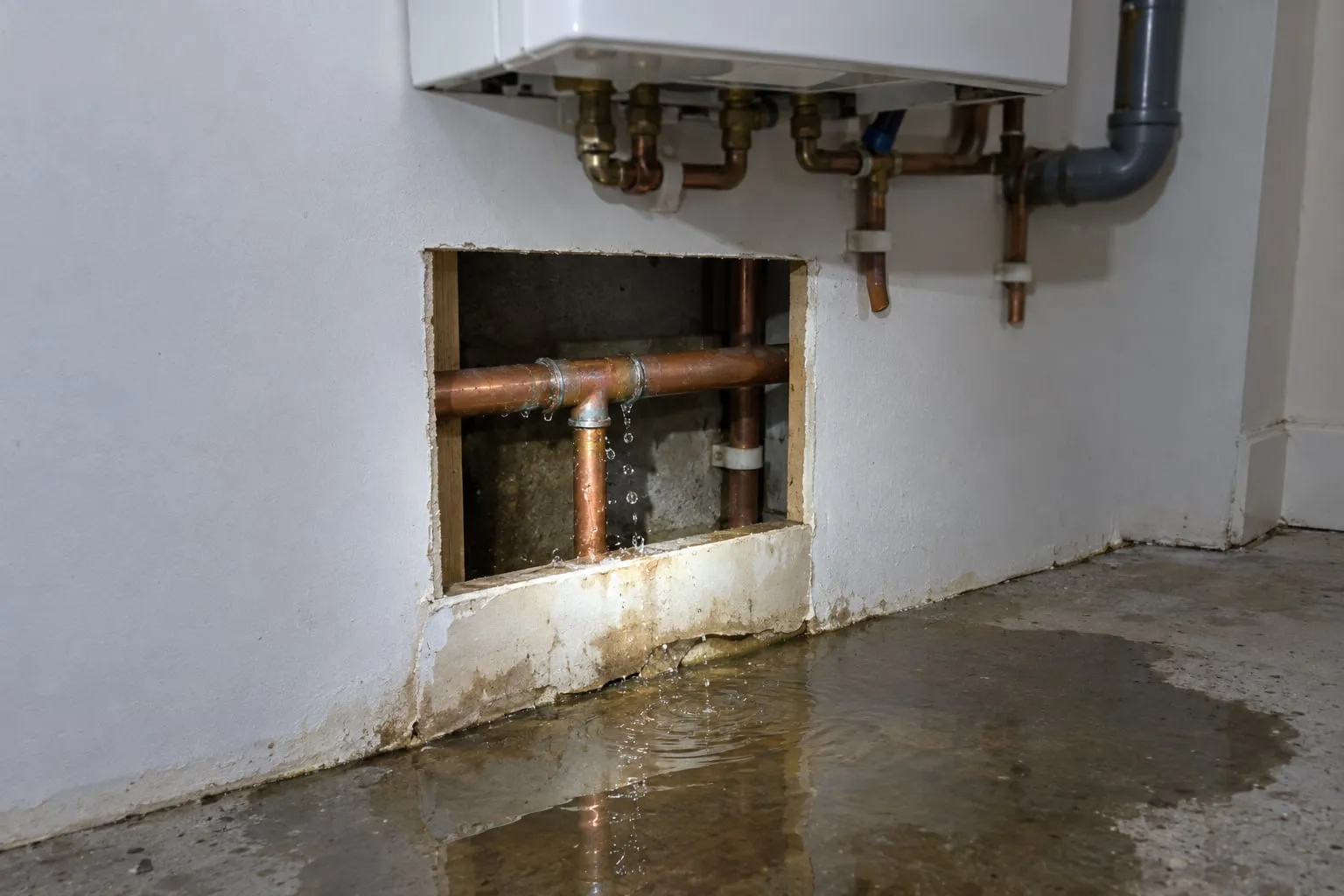
What you notice. A boiler that needs repressurising every few days, a cylinder cupboard with a damp floor, a radiator pipe that disappears into the floor next to a swollen skirting board.
How it is found. Pressure testing circuit by circuit, thermal imaging of the flow and return pipes, and tracer gas in the heating system where the pipe is buried.
What you notice. Water that appears after heavy rain: around a new window frame, under a flat roof or balcony, at a roof junction or where a soil pipe goes through the roof.
How it is found. Moisture mapping and thermal imaging from inside, then dye, tracer gas or an electronic roof leak detector on a flat roof or balcony. ADI locates and reports roof and window leaks; the repair is for the builder or a roofer.
ADI’s engineers combine these seven methods to locate hidden leaks before opening a new floor, wall or driveway.
Tracer gas
A safe, non-flammable hydrogen and nitrogen mix is put into the pipe or void. It escapes at the leak, rises through the floor or ground, and a detector picks it up at the surface.
In a new build: Supply pipes under new driveways, underfloor heating loops and flat roofs.
Acoustic listening
Ground and pipe microphones amplify the sound of water escaping under pressure. The loudest point is the leak.
In a new build: Supply pipes under paving and gardens, and isolated heating pipes, ideally when the street is quiet.
Leak-noise correlation
Two sensors clamped to a pipe record the leak noise from either side; the correlator works out how far along the pipe the leak sits.
In a new build: Longer supply runs across a plot, and pipes in screed where listening alone is slow.
Thermal imaging
A thermal camera shows warm pipes and cold, wet patches behind finished surfaces. It scans large areas quickly and is always paired with another method to confirm.
In a new build: Mapping underfloor heating loops, and hot pipes buried in new walls and floors.
Borescope cameras
A camera on a flexible tube goes through a small, easily made-good hole to look inside a void, a duct or a boxed-in pipe.
In a new build: Ceiling voids under en-suites and boxed-in pipes behind new plasterboard.
Moisture mapping
Pin and pinless meters read moisture in walls, floors and concrete. Plotted across the area, the readings show where the water has travelled and where it started.
In a new build: Working out how far water has spread through new screed, plaster and joists.
Pressure testing
Each circuit is isolated and held under pressure. A drop confirms a leak on that circuit; a steady gauge rules it out, and proves a repair afterwards.
In a new build: Isolating each underfloor loop and supply in turn, and proving a repair before the floor goes back down.
Tracer gas · Searching at the surface
Acoustic listening · Ground microphone
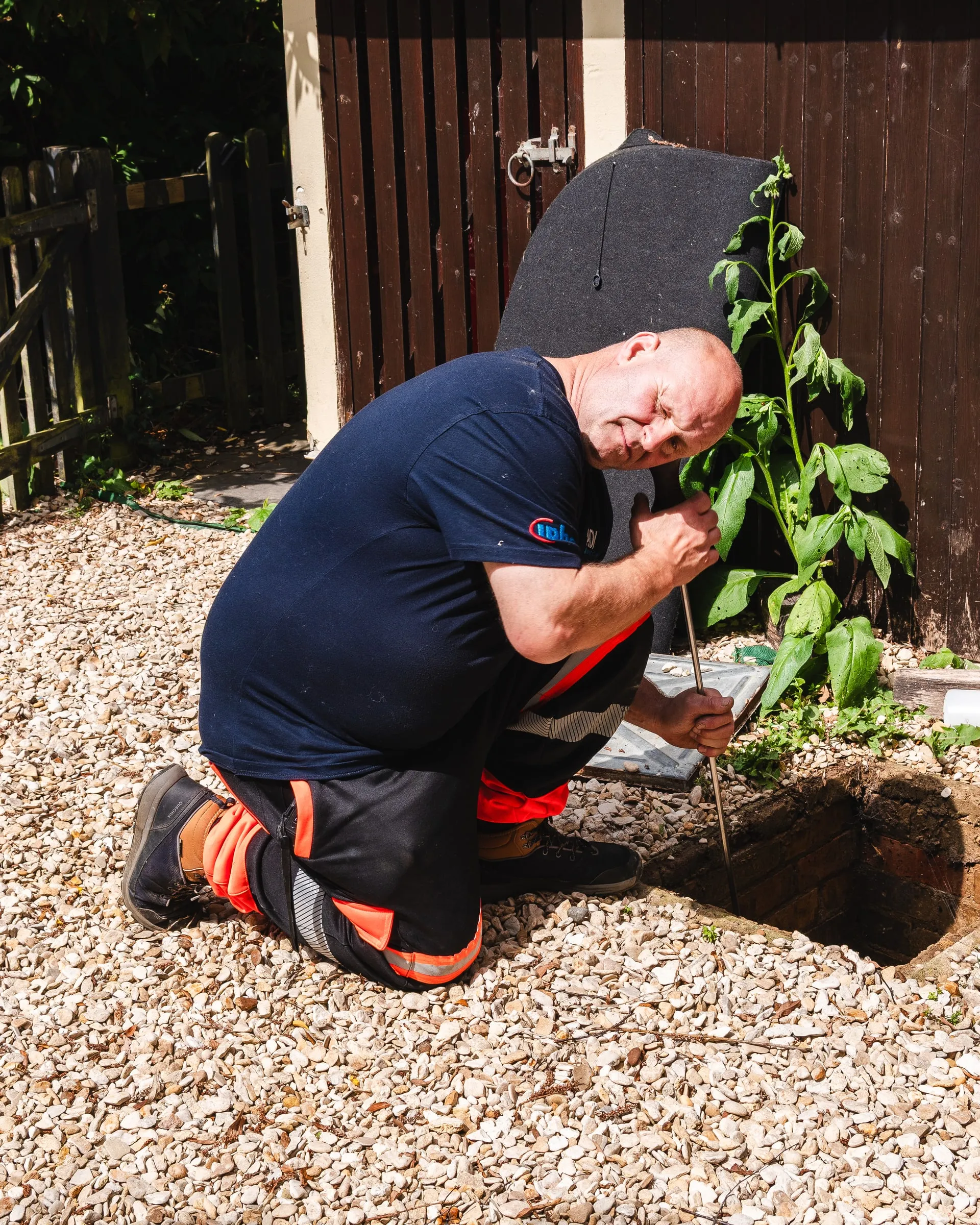
Targeted access · One small opening
Underfloor heating and hidden pipe leak case studies
Real ADI investigations on pipes buried in screed, including a house still under construction, with the findings taken from ADI’s published write-ups.
A loop failed its pressure test after the screed was laid. Sound and gas both travelled along the pipes, so thermal imaging with warm water found the leak on the far side of the room.
Tell us the postcode, what you have noticed and how old the house is. Housebuilders, say which plot and what stage it is at. The office will ask about the supply, the heating and access, then give you availability and a quote.
2
Step 2: We sort out access
The engineer needs the meter, the stopcock, the boiler and cylinder, the underfloor heating manifold and the rooms affected. On a live site, tell the office about inductions, PPE and who holds the keys to the plot.
3
Step 3: The engineer arrives
They look at the meter, the stopcock, the boiler pressure and the manifold first, and ask what has changed since you moved in. Commercial jobs for housebuilders come with a risk assessment and method statement.
4
Step 4: The survey narrows it down
Pressure testing separates the circuits. Thermal imaging, moisture mapping, acoustics, tracer gas and cameras then close in on the leak. Some tests need the water or heating off for a short while.
5
Step 5: You get the findings in writing
A report with photographs, findings and recommendations that can go to the builder, the warranty provider or your insurer as it stands.
6
Step 6: Repair where it is quoted
Pipework leaks, underfloor heating pipe included, can be quoted and repaired, often on the same visit, then pressure tested. Roof, window and tiling faults are located and reported for the builder or the right trade.
“Hamaad from ADI was great. He was very thorough with his work and communicated everything very clearly. He was able to locate the leak and provided a detailed report that could be shared with my insurer. He went above and beyond to answer questions about my insurance claim from both me and my insurer. I'd highly recommend their services.”
“We had a major water leak of approximately 220 litres per hour and, with a holiday booked only a few days later, we urgently needed someone to find and repair it. […] Frank arrived at our house. He was extremely polite, professional and clearly very experienced. He quickly set up the equipment, carried out a tracer gas test and pinpointed the leak to an area just outside our garage underneath the driveway. […] The whole job, from arriving at our house to finding and repairing a 220 litre-per-hour leak, was completed in around three hours.”
“Craig was punctual, knowledgeable, efficient and very tidy. This is a large property and he traced leaks and sources of damp in walls and in heating pipes under concrete floors.”
“Robert Gires attended our property and was extremely professional, knowledgeable and meticulous throughout the whole process. He carefully removed part of the kitchen cabinet to gain access, dug into the floor to properly investigate and assess the leak, and explained what he was doing along the way. What impressed me most was the care he took with our property. Once the investigation was completed, Robert put everything back in place neatly and left the area tidy.”
New build leak detection specialists, provided by ADI Leak Detection
New Build Leak Detection, a specialist service from ADI Leak Detection. ADI started in 2011 and has more than twenty-five leak investigation engineers across England, Scotland and Wales, working in finished homes and on building sites.
£5 million public liability insurance. Engineers hold CSCS cards for work on construction sites.
Accredited by CIPHE, WIAPS and WaterSafe for plumbing and water regulations, and a SPATA-approved contractor for pool work.
Reports a builder, warranty provider or insurer can use, with photographs, findings and recommendations.
4.7 on Trustpilot from 1600+ reviews, checked 14 September 2026.
Can you find the leak without ripping up a new floor?
Usually. Tracer gas, acoustics, thermal imaging, moisture mapping and camera inspection narrow the leak to a small area before anything is opened. Some jobs still need an opening to confirm and repair the fault, and no survey can promise zero disturbance, but the aim is one small hole in the screed or plasterboard rather than a room taken apart.
My house is still under the builder’s warranty. Should I call the builder first?
Tell the builder in writing as soon as you find a leak: most new home warranties expect it, and many make the builder responsible for defects in the first two years. You can still bring ADI in, because the builder asks for it or because you want the leak found and recorded independently. The report gives the builder, the warranty provider or your insurer the location and the evidence. Check your own warranty document for how to report a problem.
How quickly can an engineer attend?
Call the office with the postcode and the office team will give you current availability. ADI has more than twenty-five engineers across England, Scotland and Wales, and water coming through a new ceiling or floor is treated as urgent. We do not promise arrival times on a website; you get a real answer on the phone.
Do you repair what you find?
Pipework leaks, including supply pipes and underfloor heating pipe, can be quoted and repaired, often on the same visit, and pressure tested afterwards. Roof, window, tiling and shower tray faults are located and reported for the builder or the right trade. Repairs are charged separately from the survey and are quoted before any work starts.
Why do new build homes get leaks?
Most leaks in new homes come from how something was fitted rather than from wear. A push-fit joint that was never pushed fully home, a pipe caught by a screw when the kitchen, skirting or a TV bracket went up, an underfloor heating loop damaged while the screed was laid, or a shower tray that moves as the house dries out. Some show up in the first few weeks; others take months, until a joint finally gives.
Is leak detection covered by insurance?
Often, if your home insurance includes trace and access, which is the insurer’s name for finding and exposing a hidden leak. With a new home the builder or the warranty may be responsible first, so check both before the visit and tell the office what they need. ADI’s report carries photographs, findings and recommendations for exactly that purpose.
Do you work for housebuilders before handover?
Yes. Engineers attend plots under construction and newly completed homes, hold CSCS cards for site work, and supply a risk assessment and method statement for commercial jobs. A typical call is an underfloor heating loop that fails its pressure test after the screed has gone down. Tell the office the plot, the stage of the build and who the site contact is.
Call ADI about a leak in a new build
Describe what you have noticed, how old the house is and the postcode. The office team will talk through the survey, give you a quote and current availability, and book the engineer.